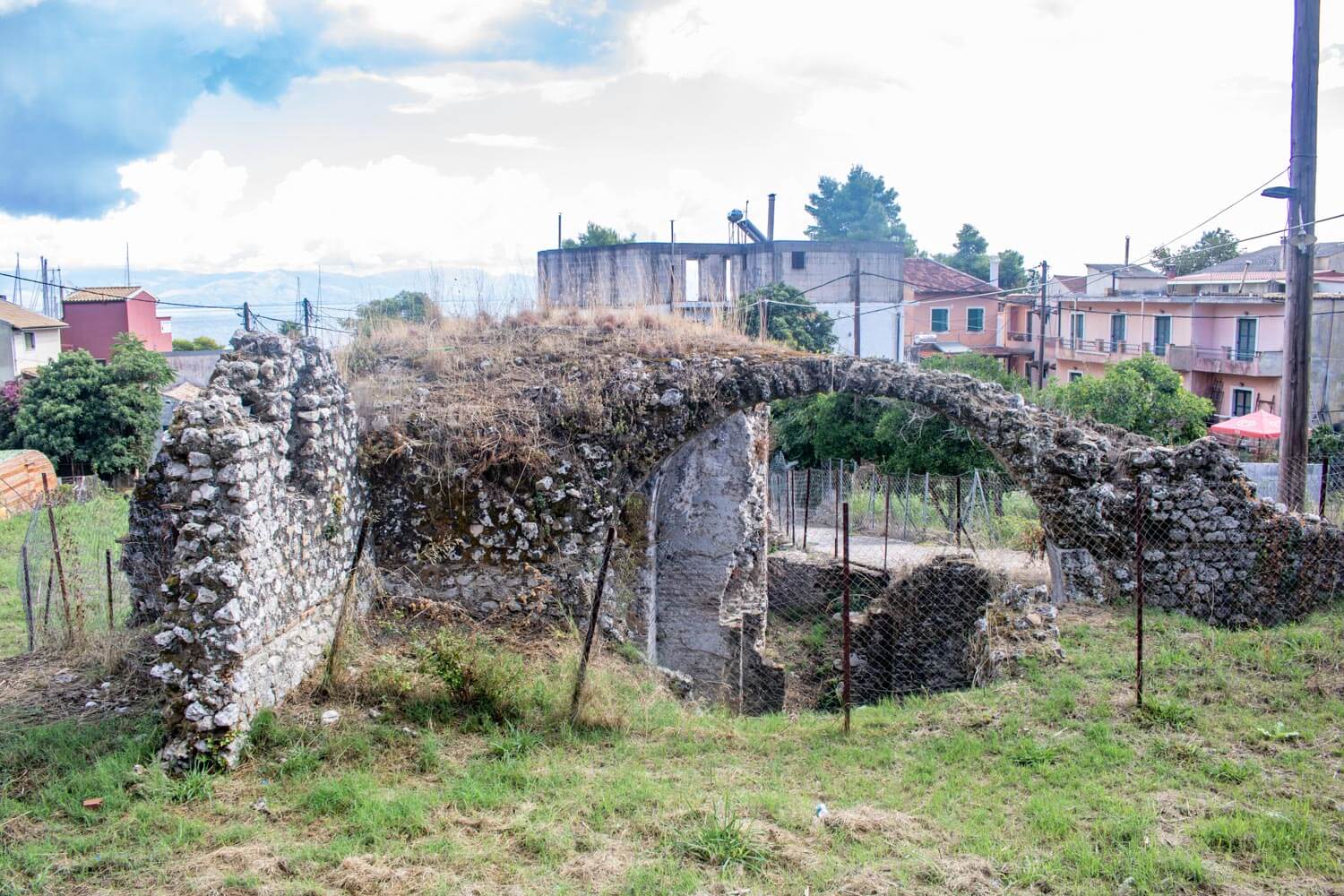
Archaeological monuments
The Old Fortress (Paleo Frourio)
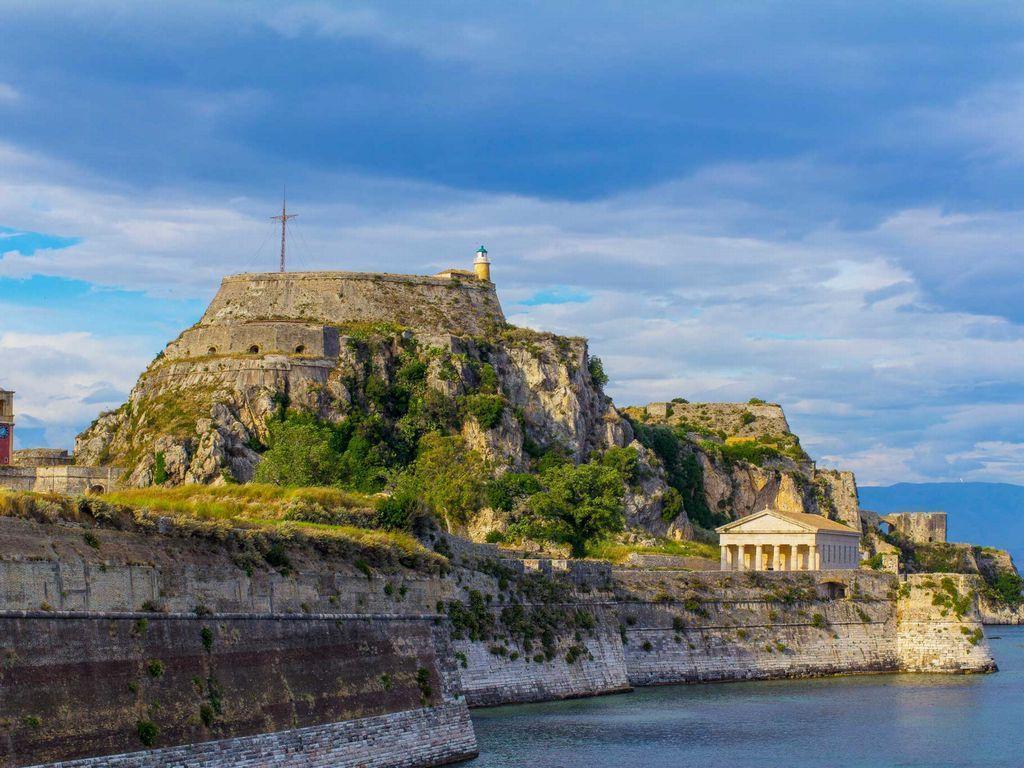
Dominating the eastern skyline of Corfu Town, the Old Fortress is a masterpiece of Venetian military architecture, built on a rocky promontory. Constructed by the Venetians in the 15th and 16th centuries over the ruins of a Byzantine castle, its purpose was to protect the island’s inhabitants from the Ottoman invasions. Visitors cross a historic bridge over a moat, now a sea channel, to enter its massive walls, where they can explore the bastions, old barracks, and the iconic clock tower.
The views from the very top of the fortress are breathtaking, offering a panoramic vista of Corfu Town, the sea, and the surrounding mountains. Today, it serves as a cultural venue, often hosting concerts and sound and light shows, making it a living monument that blends history with modern life.
The New Fortress (Neo Frourio)
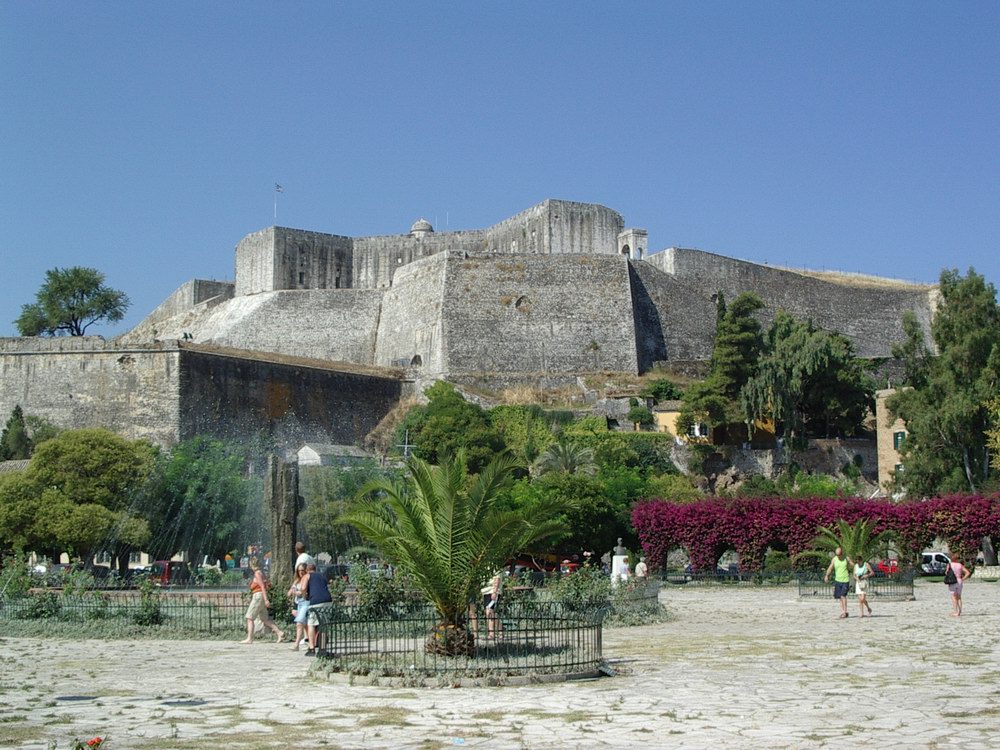
Built by the Venetians in the late 16th century to further fortify the city, the New Fortress is a massive, multi-level structure located on the Hill of St. Mark. Its imposing walls and complex bastions were designed to protect the city from land-based attacks and offer a formidable defense. Unlike the Old Fortress, it is more integrated into the urban fabric, with its lower parts adjacent to the bustling port and the old neighborhoods of the city.
Exploring the New Fortress feels like stepping into a labyrinth of tunnels, ramps, and vaulted chambers. From its highest points, visitors are rewarded with spectacular views over the city’s rooftops, the port, and the sparkling Ionian Sea. It stands as a powerful reminder of Corfu’s strategic importance as a gateway between East and West.
The Achilleion Palace
Though a palace, the Achilleion is a significant historical monument of the 19th century, built by Empress Elisabeth of Austria (Sisi). Deeply melancholic and in love with ancient Greek mythology, she commissioned this neo-Pompeian style palace as a sanctuary to honor the Greek hero Achilles. The palace is adorned with stunning murals and paintings depicting scenes from the Iliad and the life of Achilles.
Surrounding the palace are magnificent terraced gardens filled with statues of Greek deities and famous mythological figures, the most famous being the “Dying Achilles.” Later purchased by the German Kaiser Wilhelm II, the palace offers a fascinating glimpse into the romantic and royal sensibilities of a bygone era, combined with stunning views over the island.

The Temple of Artemis (Paleopolis)
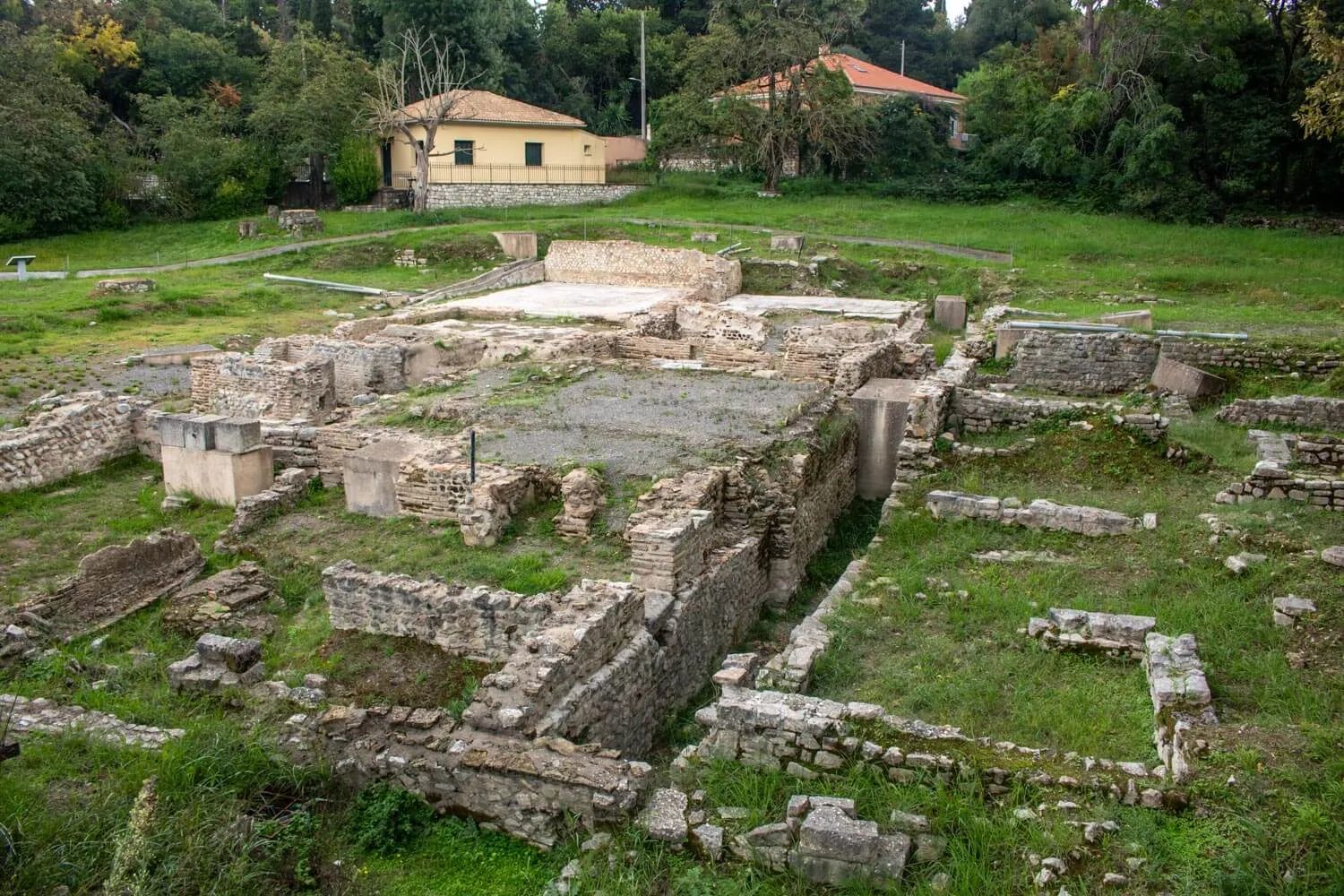
Located in the area of Paleopolis (the ancient city of Corfu), the ruins of the Temple of Artemis are a cornerstone of ancient Greek architecture. Dating back to around 580 BC, it is considered one of the earliest and most significant examples of Doric architecture. The site itself is now mostly ruins, but the foundation stones give a sense of the immense size of this once-great temple.
The most famous artifact from this temple, the magnificent pediment depicting the Gorgon Medusa, is housed in the Archaeological Museum of Corfu. Visiting the site allows one to walk through the same grounds where the ancient Corcyreans worshipped, connecting the modern landscape to its deep mythological and historical roots.
Roman Mosaics of Venizelou Street
In the picturesque fishing village of Benitses, located south of Corfu Town, lie the ruins of a significant Roman bath complex. These baths, dating from the 3rd to the 5th century AD, are evidence of the island’s prosperity and importance during the Roman and early Byzantine periods. The site reveals the typical structure of Roman baths, including the caldarium (hot room) and tepidarium (warm room), with well-preserved mosaic floors.
The complex offers a tangible connection to the daily life of the island’s inhabitants nearly two millennia ago. It stands as a testament to the sophisticated engineering and culture of the Roman Empire, showing how deeply Roman influence permeated this Ionian island long before the later Venetian and British rules.